Prepare for ISO 9001 in Construction: What You Actually Need
When I visit construction sites before an ISO 9001 audit, the pattern is usually the same. People are busy, paperwork is scattered, and a week before the audit someone realises a lot of things are in heads and inboxes, not in a place an auditor can actually see.
If you are in that position, this guide is for you. I want to show you how to prepare for ISO 9001 in construction in a way that fits real projects, not a perfect textbook world.
Why ISO 9001 matters on construction projects

On most jobs, nobody wakes up thinking about clauses. They think about pouring concrete on time, avoiding rework, keeping the client calm, and getting off site without defects or disputes.
ISO 9001 in construction is simply a structured way to support that:
- Plan the work properly
- Use the right people, methods and materials
- Check what you have done
- Fix problems and learn from them
If you see the standard as a framework for doing consistent, good quality work, it becomes easier to prepare for ISO 9001 in construction without feeling like you are doing two separate jobs, one for the project and one for the certificate.
What auditors really look for in construction companies

Most auditors want to see three things.
- You have a clear construction quality management system.
- People actually use it.
- It helps you control and improve your projects.
In practice, that means they will look at:
- How you move from tender or contract award through planning to handover
- How you control subcontractors and key suppliers
- How you plan inspections and tests, and keep records
- How you handle nonconformities, snags and complaints
- Whether you use lessons from one project to improve the next
When you prepare for ISO 9001 in construction, try to follow the same path. Pick a live or recent project and ask, for each step, “What did we say we would do, what did we actually do, and what can we show for it?”
Step 1: Map your scope and key processes

Before you touch documents, get clear on what is in and what is out.
- Which companies and offices are in scope
- Which activities you cover, for example design, construction, maintenance
- Which sites or regions are included right now
Then map the key processes that turn a contract into a finished job. It does not need to be fancy. A simple list is enough:
- Enquiry and tender
- Contract review
- Planning and programming
- Procurement and subcontractor management
- Site setup and construction
- Inspections, tests and sign off
- Handover and aftercare
This helps you explain your system in plain language when the auditor sits down and asks, “Talk me through how you run a project here.”
Step 2: Get your documentation and records in shape

A lot of stress comes from not knowing where things are. If you want to prepare for ISO 9001 in construction without that last minute scramble, focus on two areas: controlled documents and evidence.
For documents, check that:
- Your quality manual or framework reflects how you really work
- Procedures for key activities are up to date and accessible
- Forms and templates people actually use are controlled, not ten different versions
For records, pick a sample project and pull together:
- Project quality plan
- Approved drawings and revisions
- Method statements and risk assessments
- Inspection and test records
- Material and product certificates
- Site diaries and photographs
- Training and competence records for key roles
Aim for one central place where current documents and important records can be found quickly. It can be digital or physical, as long as it is clear and consistent.
Step 3: Check what is really happening on site

Most of the real story is on the site, not in the office.
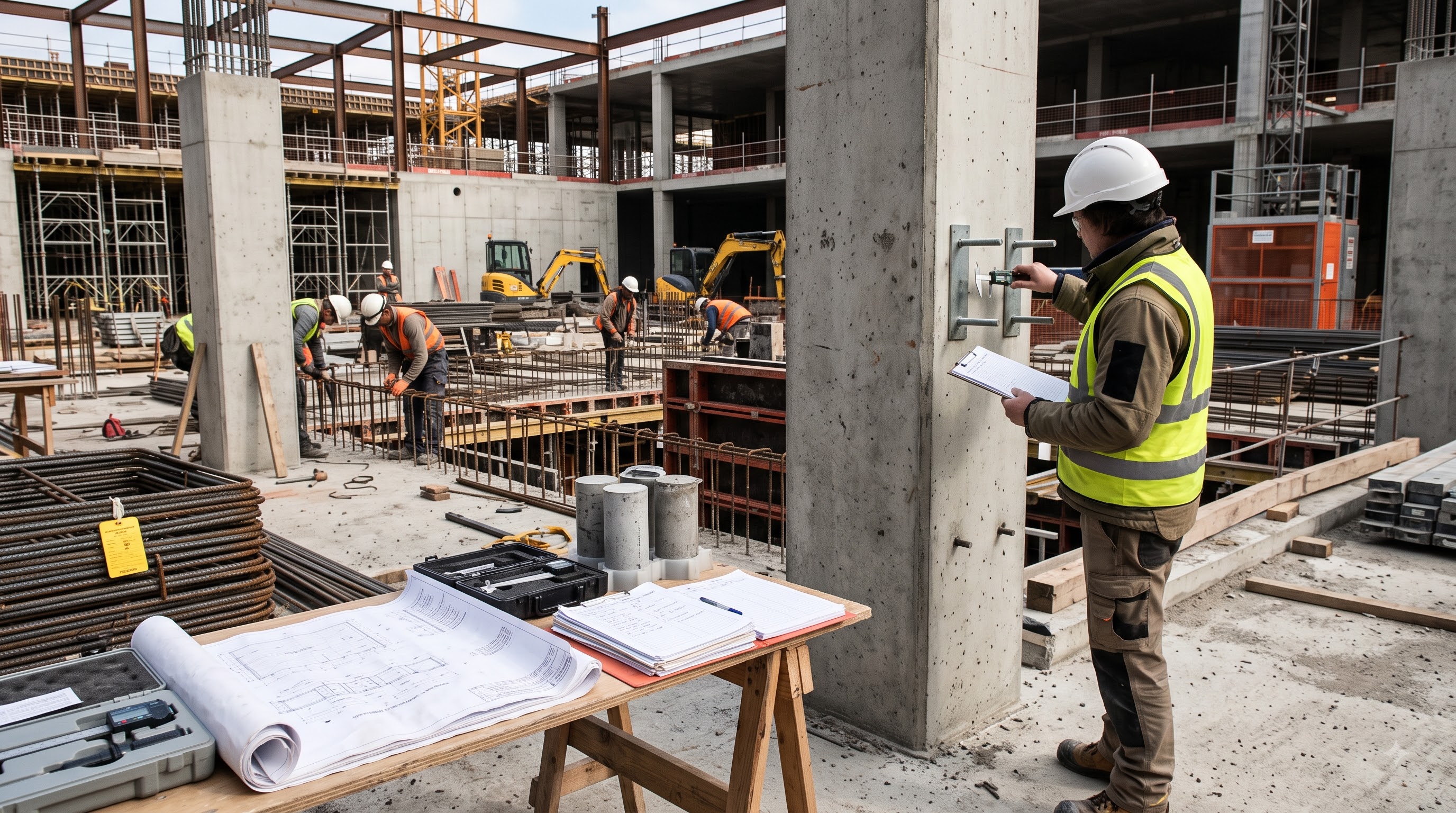
Before the audit, I like to walk a project with a site manager and look at it as an auditor might:
- Is housekeeping reasonable, with materials stored and protected properly
- Are works identified so we know what has been inspected and what has not
- Does what I see match the method statements and drawings
- Can the team show recent inspection and test records for critical activities
- Is measuring and test equipment controlled and, where needed, calibrated
You do not need to fix everything in a day. The aim is to spot obvious gaps between “what we say” and “what we do” and deal with the ones that would be hard to justify on audit day.
Step 4: How I use internal audits to prepare for ISO 9001 in construction

Internal audits are one of the simplest ways to prepare for ISO 9001 in construction. Done well, they let you find issues on your own terms, not in front of a client or certification body.
I treat internal audits as a PDCA cycle in miniature:
- Plan: choose a project or process, define the scope and timing
- Do: carry out the audit using a structured checklist tied to your processes
- Check: review the findings, look for patterns and root causes
- Act: agree actions, owners and dates, then follow up
In construction, a good internal audit usually follows a project from start to finish rather than just sampling random clauses. It might start with the contract review, look at procurement, then move on to site control, inspections and handover.
If you use repeatable checklists and keep findings in one place, you also start to see trends across sites, not just one job at a time.
Step 5: Bring your people and subcontractors with you

I have seen well written systems fail because nobody on site understood what they were for.
Before an audit:
- Share the audit date and a simple overview of what will happen
- Make sure project and site managers know the plan and where key records live
- Let supervisors know they may be asked how they control quality in their area
- Brief key subcontractors on your expectations and how their work links to your quality requirements
Encourage straightforward answers. If someone does not know something, it is far better for them to say “I am not sure, let me check” than to invent an answer on the spot.
Common mistakes when companies prepare for ISO 9001 in construction

A lot of companies try to prepare for ISO 9001 in construction by rewriting documents just before the audit. That usually creates more confusion, not less. Other common issues I see include:
- Impressive manuals that site teams have never seen
- Records saved on personal devices with no central backup
- Old nonconformities left open or weakly closed
- Procedures copied from a much larger company that do not fit your size
- Overly complex flowcharts that nobody uses on a live project
Auditors are more interested in simple, consistent practice than polished documents that do not match reality.
A short checklist to help you prepare for ISO 9001 in construction
Here is a quick checklist you can use to prepare for ISO 9001 in construction in a more controlled way:
- Scope confirmed and main processes mapped
- Quality documentation up to date and aligned with how you work
- Key project records complete and easy to find
- At least one recent internal audit done, with actions tracked
- Site walk completed and obvious issues addressed
- Staff and key subcontractors briefed on the audit
- Previous findings reviewed and status clearly recorded
You do not need perfection on every point, but you should be able to explain your position on each one.