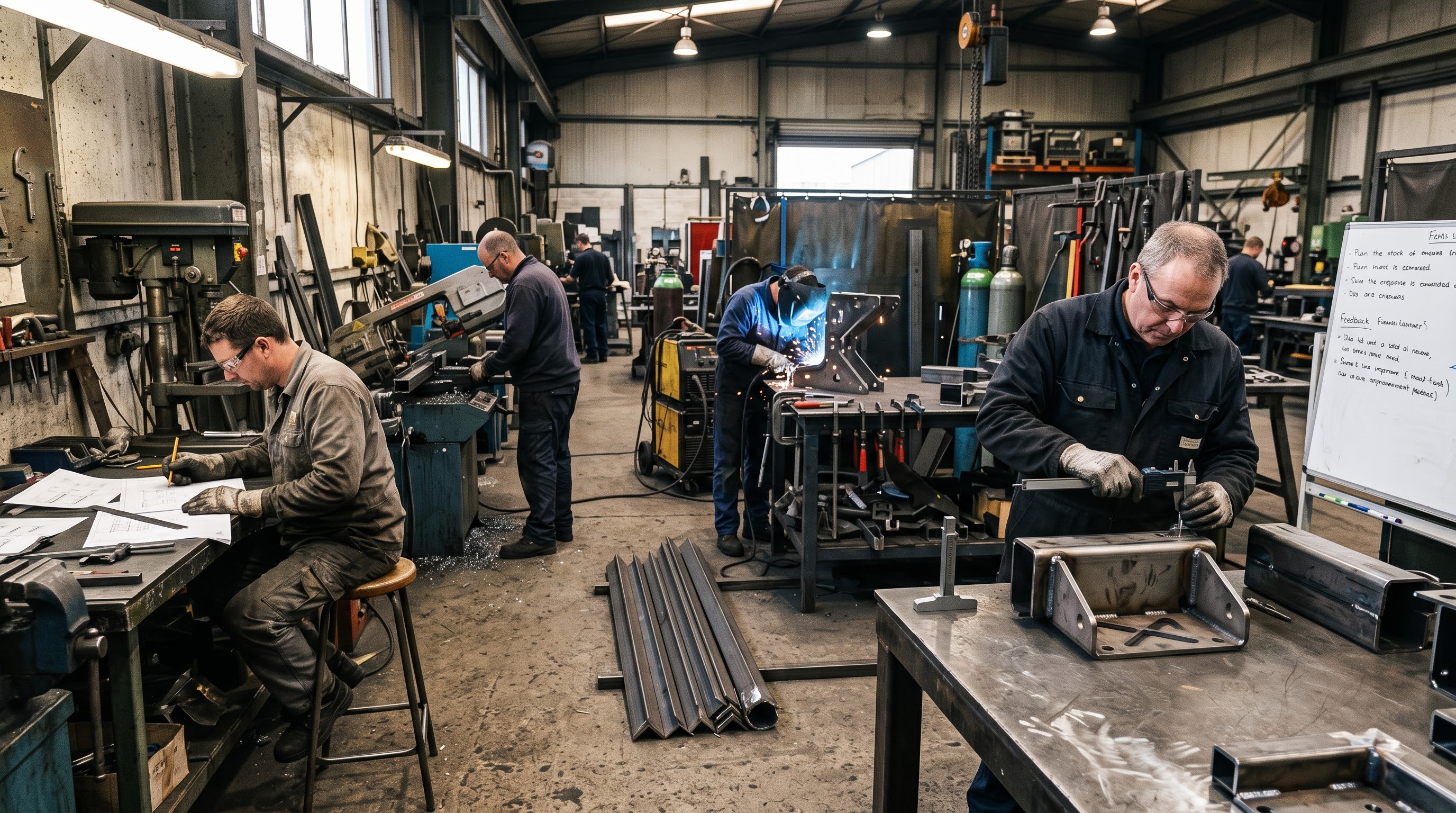
Using the PDCA Cycle to Improve Performance in the Basic Metal and Fabrication Industry
Successful metal fabrication depends on precision, but reactive fixes often lead to high scrap rates and wasted material. The PDCA in basic metal industry framework, Plan, Do, Check, Act, provides a structured way to turn these quality challenges into systematic improvements.
Identify specific issues like weld porosity or machining drift and set measurable targets.
Run small, controlled trials of your proposed fix before rolling it out across the workshop.
Measure your results against the baseline data to confirm the improvement is real.
Standardise successful changes by updating work instructions and training records.
Implementing this cycle is essential for meeting ISO 9001 requirements for continual improvement. While many businesses struggle with scattered spreadsheets, using digital tools like iAudit Global allows teams to capture photo evidence, track corrective actions in real time, and build a reliable audit trail that proves compliance and drives better operational performance.
Metal fabrication runs on precision. A single measurement error, an inconsistent weld or poorly controlled heat treatment can turn expensive raw material into scrap. Yet many fabricators still manage quality improvement the same way they did twenty years ago: reactive fixes, scattered spreadsheets and the same problems surfacing month after month.
If your rejection rates haven't moved in the past year, or if corrective actions keep getting logged but never properly closed, the issue isn't effort. It's structure. The PDCA cycle offers that structure, and when applied properly in the basic metal industry, it turns firefighting into systematic improvement.
What the PDCA Cycle Really Means in Manufacturing

PDCA stands for Plan, Do, Check, Act. It's a four-step method for testing changes, measuring results and building improvements into your standard operating procedures. The model was developed by W. Edwards Deming and has been the backbone of continuous improvement in manufacturing for decades.
Here's what each stage involves when you apply PDCA in the basic metal industry:
Plan means identifying a specific problem, gathering data and deciding what you're going to test. In metal fabrication, that might be excessive spatter in MIG welding, dimensional drift in CNC machining or high rejection rates in powder coating.
Do means running a small, controlled trial of your proposed fix. You change one variable at a time so you know what actually worked. You don't roll out new welding parameters across three shifts before you've tested them on one.
Check means comparing your trial results to the baseline. Did defect rates drop? Did cycle time improve? Was there any unintended impact on surface finish, strength or dimensional accuracy?
Act means making the change permanent if it worked, updating your work instructions and training records, and building it into your ISO procedures. If it didn't work, you loop back to Plan with better information.
The cycle doesn't end. Each improvement becomes the new baseline for the next round. That's why PDCA in the basic metal industry isn't a project. It's how you run operations.
Where Fabrication Companies Go Wrong with PDCA

Most metal fabricators have heard of PDCA. Far fewer use it properly. The gap between knowing the theory and actually improving performance comes down to a handful of repeated mistakes.
Skipping the Plan stage
A customer complains about weld porosity, so you immediately change the gas flow rate or swap suppliers. No baseline data. No root cause analysis. Just a guess dressed up as action. Planning in PDCA means documenting current performance, mapping where the problem occurs (which shift, which welder, which material grade) and forming a hypothesis you can actually test.
Scaling changes before checking results
You trial a new cutting parameter on one machine, it looks good, so you update the settings across the entire workshop by the end of the week. Then six weeks later, tool wear has doubled and you don't know why. The Check stage exists for a reason. You measure results over a meaningful sample size, check for side effects and confirm the improvement is real before you make it standard.
Leaving operators out of the process
A fabricator who has run the same press brake for five years will spot variables an engineer sitting in the office won't. If your PDCA cycles are planned in management meetings and handed down as instructions, you'll struggle to get buy-in on the shop floor.
Weak documentation
ISO 9001 auditors expect to see objective evidence of continual improvement. That means documented plans, recorded trial results, analysis of findings and proof that successful changes were embedded into procedures. If your PDCA cycles live in someone's notebook or a standalone Excel file that nobody else can find, you've got no audit trail.
How Metal Fabricators Use PDCA for ISO 9001 Compliance

ISO 9001 clause 10 requires organisations to continually improve the effectiveness of their quality management system. PDCA is the method most auditors expect to see underpinning that requirement.
Clause 10.2 (Nonconformity and corrective action) requires you to react to problems, determine root causes, implement corrections and review effectiveness. That's PDCA in action. When a batch of welded assemblies fails inspection, your corrective action should follow the four-step cycle: plan the fix, trial it, check it worked, then act by updating procedures and retraining staff.
Clause 9.3 (Management review) asks for evidence of continual improvement. A log of completed PDCA cycles, showing what you tested, what you measured and what you standardised, gives management review meetings real substance instead of the same vague bullet points every quarter.
Clause 6.1 (Risk-based thinking) expects you to identify risks and opportunities. PDCA provides a structured way to test mitigations. If you've identified a risk around inconsistent material traceability, you plan a process change, trial it on one product line, check the results and roll it out if effective.
When auditors ask how you demonstrate continual improvement, pointing to a documented history of PDCA cycles with measurable outcomes is far stronger than saying “we have regular meetings” or “we respond to customer feedback”. The cycle also supports multi-site consistency. If you operate several fabrication facilities, standardising your PDCA approach means improvements proven at one site can be tested and adopted at others with a clear methodology and comparable data.
Common PDCA Mistakes in Metal Fabrication (and How to Avoid Them)

Even when fabricators commit to using PDCA properly, a few traps keep showing up.
Vague problem statements don't work
"Quality issues in welding" isn't a problem you can test. "Porosity in 6mm MIG welds on mild steel, occurring in 12% of joints on night shift" is. The more specific your Plan stage, the easier everything that follows becomes.
Changing multiple variables at once
If you adjust wire feed speed, preheat temperature and shielding gas mix in the same trial, you won't know which change made the difference. Test one thing at a time, even if it feels slow.
Checking results too early
Running five test pieces and declaring success isn't enough. Build a sample size that reflects real production conditions, and check results over several days or shifts, not just one morning.
No follow-up after Act
You've updated the work instruction and retrained the team. Great. But if you don't verify compliance a month later, the change won't stick. Schedule a follow-up audit as part of your Act stage.
How Digital Audit Tools Strengthen the PDCA Cycle

Spreadsheets can technically track a PDCA cycle. You can log the plan in one tab, record trial data in another, summarise findings in a third and update a status column when you've acted. But as soon as you're running more than a couple of cycles, or working across multiple sites, the system breaks down.
Digital audit tools built for ISO compliance handle PDCA differently. Instead of scattered files, you get a single platform where every stage of the cycle is documented, linked and visible to the people who need it.
Plan: You log the problem, attach baseline data and assign responsibility. If the issue ties to a specific ISO clause (say, 8.5.1 on production control), you link it directly so your audit trail is clear from the start.
Do: Field teams can document trial activities on mobile devices, attach photos of welding settings, material labels or finished parts, and log observations in real time.
Check: Results are captured against the original target. You can compare performance across shifts, machines or sites using dashboards that pull live data.
Act: When a change works, it's built into the corrective action record with closure evidence, linked training records and updated procedure references.
For metal fabricators running PDCA in the basic metal industry, the practical difference is speed and traceability. You move from monthly improvement cycles to weekly ones because documentation happens as you go, not as a separate admin task.
Tracking PDCA Cycles in Metal Fabrication: Spreadsheets vs. Audit Software
Start Your Next PDCA Cycle with a Metal Fabrication Audit Checklist

The easiest way to begin using PDCA in the basic metal industry is to run a structured audit that identifies your current gaps. Once you know where performance is falling short, you've got the input you need for the Plan stage.
We've built a free audit checklist specifically for metal fabrication and basic metal operations. It covers quality control at each production stage, from material receipt and cutting through welding, machining, finishing and final inspection. The checklist is clause-mapped to ISO 9001 so your findings tie directly to your quality management system.
Visit our basic metals and fabrication ISO audit software page to download the checklist and see how digital tools support every stage of the PDCA process, from planning through to verified closure.
PDCA Works When You Give It Structure
The PDCA cycle isn't complicated. Plan a test, run it, check the results, then either standardise the improvement or try again with better information. What makes it hard is doing that consistently, documenting it properly and making sure the changes actually stick.
Metal fabricators who succeed with PDCA in the basic metal industry are the ones who've moved past informal problem solving and built improvement into their management system. They involve shop floor staff in the Plan stage. They measure results in the Check stage instead of guessing. They track corrective actions to verified closure instead of letting them drift.
And increasingly, they're using purpose-built audit software to give the whole cycle structure, speed and visibility across every site they operate.
Ready to move your PDCA cycles out of spreadsheets and into a system built for ISO auditors? See how iAudit Global helps metal fabricators document improvement, track corrective actions and prepare for certification audits with clause-mapped checklists, mobile evidence capture and centralised visibility across all your sites.